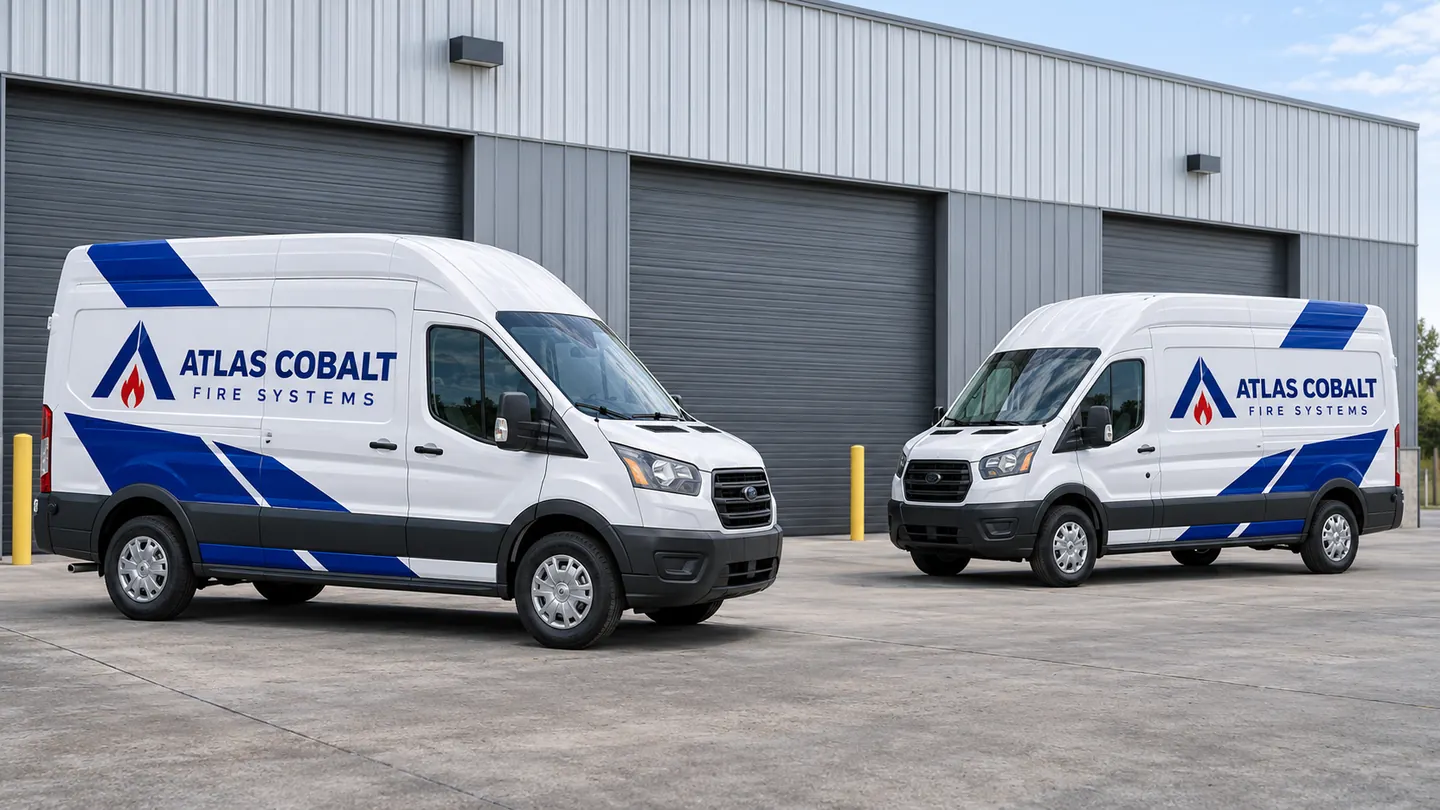
Describe normal viewing situations
Record where the vehicle is typically parked or working and which views people can reasonably approach. Avoid inventing traffic exposure or reading-distance numbers. Photos of the actual vehicle are a better starting point than a claim about how many impressions a wrap receives. Identify the main side-view business message and the rear-view contact priority. Keep those as review objectives until the designer shows how they fit the body.
- Photograph driver and passenger sides independently.
- Include open doors where they explain normal working use.
Review interruptions before repeating content
Doors, windows, tracks, handles and mounted equipment divide available space. Mark those features on the vehicle reference and ask how the message behaves when the vehicle is in use. A graphic can continue across an area without making that area suitable for essential wording. Keep the intended coverage and the message hierarchy connected. If a feature forces a compromise, decide which element can move or simplify instead of shrinking every part of the message equally.
- Identify the words that must remain understandable in each reviewed state.
- Keep optional promotional content away from unresolved equipment areas.
Approve the views as a connected system
Check that the final proofs retain the same identity while adapting to the body. Verify all repeated contact details and ensure intentional variations are documented. Compare the final coverage list with the images so the artwork does not imply an included surface that the scope excludes. Preserve a proof for each distinct view or layout group. This supports later replacements and prevents a rear-panel update from silently leaving a different contact version on another side.
- Record accepted differences between body configurations.
- Connect every released view to a named artwork revision.
Keep a working record
Before you approve the next step
- Normal vehicle use described.
- Side and rear priorities assigned.
- Doors and equipment marked.
- Essential wording checked in working views.
- Scope and proof coverage agree.
- Distinct views retained in the approval record.
Use the free planning tool to organize the details you can confirm and the questions still open.
Four questions before the next step
Should the rear always carry the phone number?
Choose the contact hierarchy that fits your business and actual vehicle. A phone number may be useful, but the briefing process should establish the intended action rather than rely on a universal placement rule.
Read the detailed guide: Assign a message purpose to each vehicle view
Can the two sides use different layouts?
They can be adapted where the vehicle or communication task differs. Keep the brand identity and approved wording consistent, and make intentional changes clear in the proof record.
Read the detailed guide: Assign a message purpose to each vehicle view
Must a wrap include every service we offer?
No. Decide what belongs on the vehicle and what is better explained at the contact destination. The brief should make the core service clear without assuming every detail needs equal emphasis.
Read the detailed guide: Choose a useful message hierarchy for a work vehicle
Does a strong hierarchy guarantee more inquiries?
No. It is a communication planning method. Actual inquiries depend on many factors, and this worksheet does not establish exposure, response rate or sales results.
Read the detailed guide: Choose a useful message hierarchy for a work vehicle
Original technical sources
Use the linked publisher's current instructions for the exact product and vehicle. This planning guide does not replace its application, safety or warranty requirements.