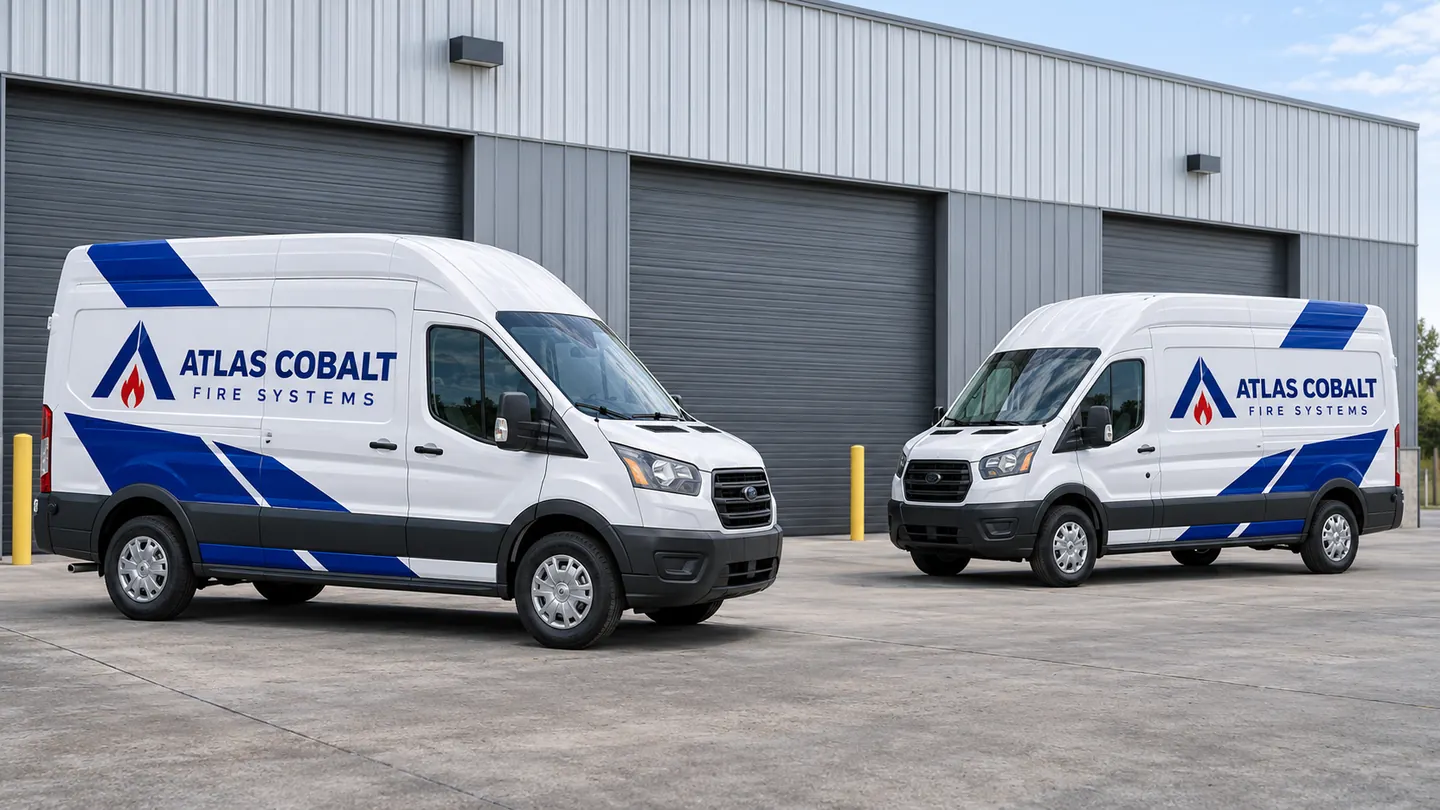
State the business in plain words
Write the company name and a concise description of the service customers should recognize. Avoid beginning with a long list of specialties or a slogan that only existing customers understand. Decide which audience the vehicle primarily addresses and what they need to know. This is an input to the design process, not a guaranteed way to create leads. The clearer the business task, the easier it is to evaluate whether the proposed artwork supports it.
- Separate essential identity from supporting promotional language.
- Ask someone outside the project what the core wording communicates.
Choose one primary next action
Select the contact route the business intends to maintain and respond through. Verify its exact spelling or digits and check the destination. Additional channels can be considered, but they should have an explicit role instead of equal visual priority by default. If the business wants a different contact route on different vehicle groups, document that variation. A design can look consistent while carrying a wrong or retired destination, so wording verification belongs in the brief.
- Identify who owns and maintains the chosen destination.
- Keep internal vehicle codes distinct from customer contact information.
Give the designer a ranked brief
Organize the content into primary, secondary and optional elements. Include current vehicle photos and explain where the vehicle is normally seen. Ask the designer to show how the hierarchy responds to each useful view and to interruptions such as doors or equipment. If everything receives equal emphasis, revisit the priorities before adding more material. Keep the approved hierarchy with the final proof so later revisions can be judged against a stable business purpose.
- List optional details that may be omitted if they weaken clarity.
- Record the final wording and approved proof revision together.
Keep a working record
Before you approve the next step
- Core service written plainly.
- Intended audience identified.
- Essential identity separated from optional text.
- Primary contact route verified.
- Content ranked for the designer.
- Final proof checked against the hierarchy.
Use the free planning tool to organize the details you can confirm and the questions still open.
Four questions before the next step
Must a wrap include every service we offer?
No. Decide what belongs on the vehicle and what is better explained at the contact destination. The brief should make the core service clear without assuming every detail needs equal emphasis.
Read the detailed guide: Choose a useful message hierarchy for a work vehicle
Does a strong hierarchy guarantee more inquiries?
No. It is a communication planning method. Actual inquiries depend on many factors, and this worksheet does not establish exposure, response rate or sales results.
Read the detailed guide: Choose a useful message hierarchy for a work vehicle
Should the rear always carry the phone number?
Choose the contact hierarchy that fits your business and actual vehicle. A phone number may be useful, but the briefing process should establish the intended action rather than rely on a universal placement rule.
Read the detailed guide: Assign a message purpose to each vehicle view
Can the two sides use different layouts?
They can be adapted where the vehicle or communication task differs. Keep the brand identity and approved wording consistent, and make intentional changes clear in the proof record.
Read the detailed guide: Assign a message purpose to each vehicle view
Original technical sources
Use the linked publisher's current instructions for the exact product and vehicle. This planning guide does not replace its application, safety or warranty requirements.